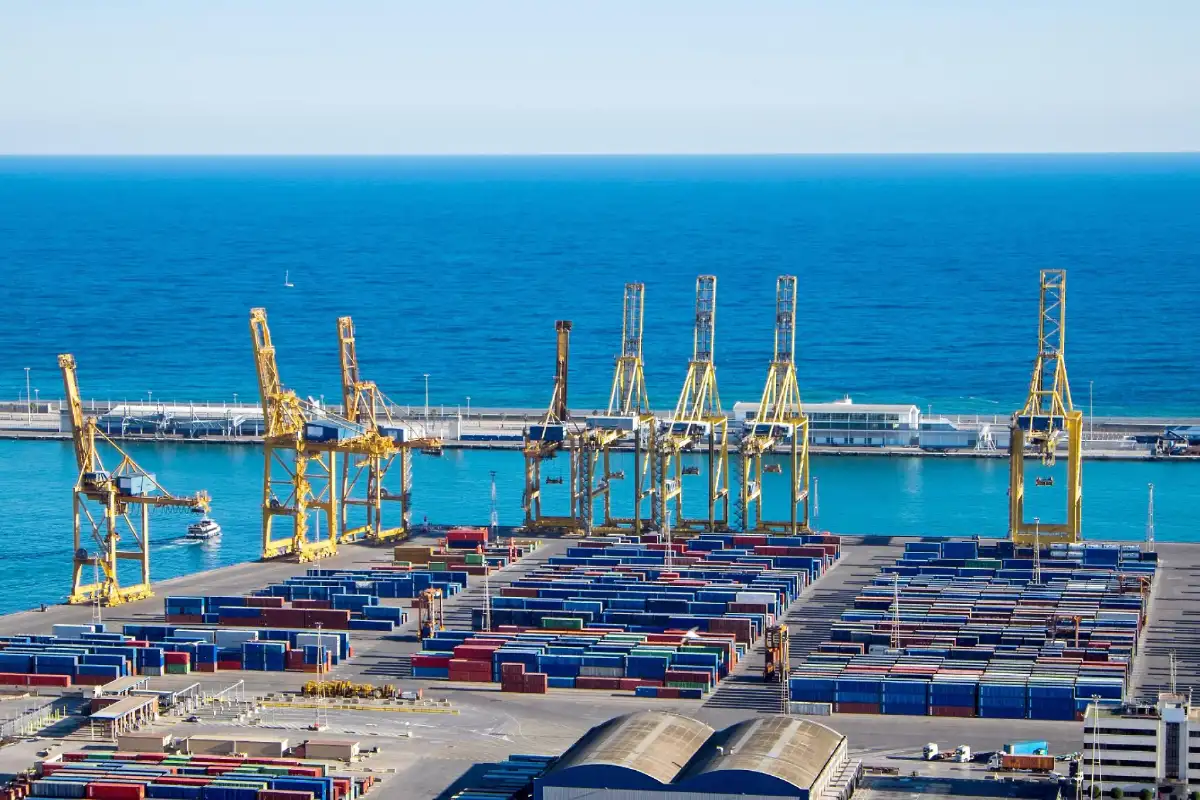
Spain’s industrial and logistics real estate market represents one of Europe’s most compelling investment opportunities, combining strategic geographic advantages with exceptional growth fundamentals that position it at the forefront of continental supply chain evolution.
Spain is a highly liquid real estate market and ranks among the world’s leading destinations for foreign capital, which represents approximately 60% of total investment activity. This international presence is even more pronounced in the logistics sector, where foreign investors account for around 80% of capital deployment. The sector consistently attracts more than €1.3bn annually, with activity further supported by domestic REITs.
The appeal of Spain’s logistics sector lies in its rapid e-commerce expansion; strong domestic consumption, supported by positive net migration; and its strategic positioning within global trade networks. Spain serves as acritical gateway for more than 500 million European consumers, while anchoring two essential trans-European transport network corridors.
The Atlantic corridor links Portugal and Spain to France and broader Europe, while the Mediterranean corridor connects Spain’s major ports of Algeciras, Valencia and Barcelona directly to the rest of Europe. This dual-corridor integration transforms Spain from a peripheral European market into a central hub for continental and intercontinental commerce.
Europe’s largest motorway network
Spain’s world-class logistics infrastructure and transport connectivity reinforces this strategic advantage. The country operates Europe’s largest motorway network alongside the world’s second-largest high-speed rail system, creating seamless multimodal freight capabilities that few European markets can match.
With 46 major seaports, including three facilities ranking among Europe’s top 10 container traffic leaders, Spain processes nearly 300bn tonne-kilometres of freight annually. The World Bank’s Logistics Performance Index, which measures the relative ease and efficiency with which products can be moved into and inside a country, ranks Spain 13th globally with a score of 3.9 – tied with France, Taiwan and Japan and above the US, UK and China.
“Spain processes nearly 300bn tonne-kilometres of freight annually”
The domestic market ecosystem is centred on Madrid and Barcelona, which together with Valencia form Spain’s primary freight triangle. This two-city backbone creates extraordinary efficiency in national distribution and a strong foundation for international connectivity.
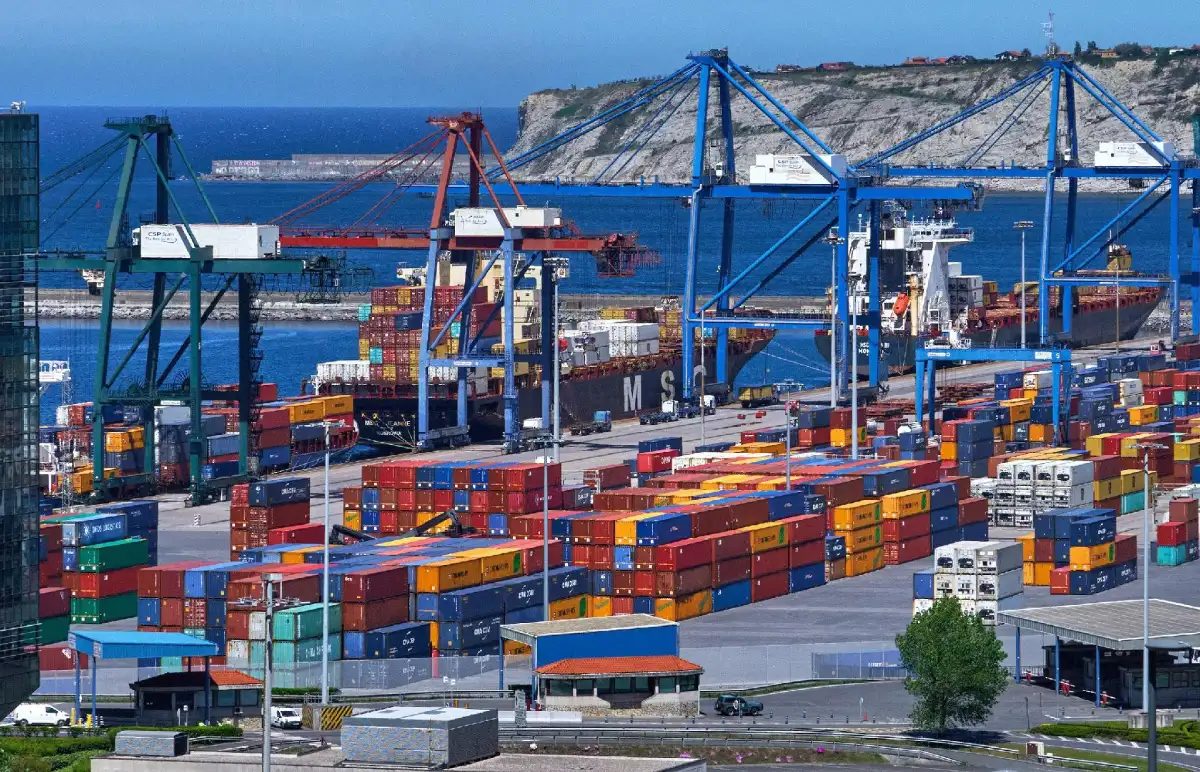
Madrid and Barcelona function as two of Europe’s most important logistics hubs outside Germany, with the Madrid-Barcelona corridor representing the country’s main freight axis for both domestic and international trade. Zaragoza’s position between these dominant cities has seen it rapidly emerge as a third logistics hub, strategically located to optimise the connection between Madrid-Barcelona as well as Bilbao and Valencia.
The Madrid leasing market has remained resilient, with over 65% of take-up focused on grade A assets, reflecting tenants’ increasing focus on modern, ESG-compliant facilities. Despite some oversupply in secondary locations pushing up the overall vacancy rate to 9.7%, demand remains exceptionally diverse across logistics operators, retailers, automotive players and food retailers, which is driving rental growth for the best located assets.
This breadth of occupier interest provides remarkable stability and growth potential, particularly as developers maintain disciplined approaches to speculative construction while holding land for turnkey projects.
Barcelona’s grade A market
Grade A assets in Barcelona look even more compelling, with vacancy at just 5% and severe shortages in prime inner-ring locations creating intense competition for well-located assets. The market has experienced substantial rental growth across all submarkets over the past 18 months, with structural supply constraints driving build-to-suit activity as the primary avenue for occupier expansion.
“The country is projected to deliver Europe’s strongest prime rental growth through 2030”
The combination of limited land availability and strict planning requirements creates high barriers to new development, supporting sustained rental growth for existing quality assets.
Prime logistics yields have repriced closer to core European levels while maintaining superior rental growth prospects that distinguish Spain from more mature markets. The country is projected to deliver Europe’s strongest prime rental growth through 2030, with rents rising from a competitive 2025 base of €110/sq m to €130/sq m by 2030.
Same-day delivery
Spain is experiencing Europe’s fastest e-commerce ecosystem growth, with the highest projected growth in the internet share of retail through 2030 and is supported by widespread same-day delivery adoption and accelerating online penetration that drives logistics space requirements.
As a result, Spain is projected to see one of Europe’s sharpest vacancy reductions from 2025 to 2028, as excess space in outer-ring submarkets, especially Madrid’s third ring, is absorbed – bringing national logistics vacancy closer toward its long-term equilibrium of roughly 6%.
“Spain is projected to see one of Europe’s sharpest vacancy reductions from 2025 to 2028”
Third-party logistics providers remain the most active demand segment, complemented by strong activity from food retailers, automotive, pharmaceutical and general retail operators seeking modern distribution capabilities. Built-to-suit activity is increasing, particularly for cold storage and manufacturing facilities, as occupiers pursue specialised, energy efficient and automation-ready space that commands premium rents.
While challenges exist – including a scarcity of land in core markets and intensifying competition for best-in-class assets – these constraints reinforce the investment thesis by limiting supply and supporting sustained rental growth. For institutional investors seeking European logistics exposure, Spain’s unique combination of world-class infrastructure, transparent and liquid investment environment and structural supply-demand imbalances is creating the optimal conditions for long-term value creation that few European markets can match.
Originally published in Green Street News by Mark McLaughlin, CEO of Real Assets, Stoneweg.